

Description
Standard: ASTM D4253/D4254, EN 13286-5
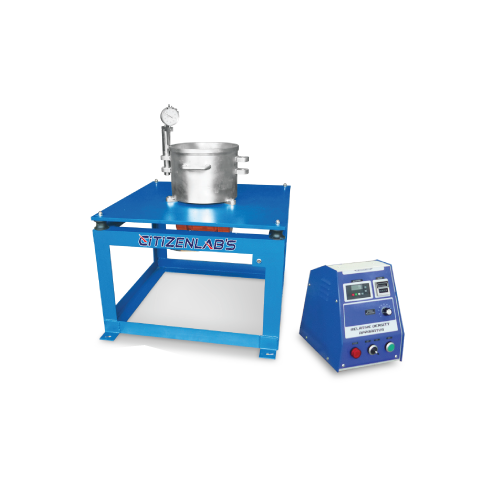
Relative Density Apparatus
A Relative Density Apparatus is used to determine the maximum dry density and water content of cohesionless materials when compacted using a vibrating table. It consists of a container to hold the substance whose density is being measured, a suspension system to immerse the substance in a liquid (usually water) of known density, and a scale or balance to measure the mass of the displaced liquid. The principle behind the Relative Density Apparatus is Archimedes’ principle, which states that the buoyant force acting on a submerged object is equal to the weight of the liquid displaced by the object. By measuring the mass of the displaced liquid and the mass of the object, one can calculate the relative density or specific gravity of the substance. Relative Density is the ratio of the density of a substance to the density of a reference substance (usually water). It is often used in various industries, such as pharmaceuticals, chemicals, and metallurgy, to characterize and compare materials. Supplied WITHOUT accessories for both ASTM & EN standard, to be ordered separately.
Features of Relative Density Apparatus
- Container: A container to hold the substance whose relative density is being measured. This container is usually transparent for easy observation.
- Suspension System: The apparatus often incorporates a suspension system to immerse the sample in a liquid of known density (usually water). This system ensures that the sample is completely submerged and remains in a stable position during the measurement process.
- Scale or Balance: A scale or balance is used to measure the mass of the displaced liquid. This measurement is crucial for calculating the relative density of the sample.
- Graduated Cylinder: Sometimes, a graduated cylinder is included to accurately measure the volume of the displaced liquid, which is necessary for calculating the relative density.
- Adjustable Platform: Some apparatus designs may feature an adjustable platform to accommodate samples of different sizes and shapes.
- Digital Display: In more advanced models, a digital display may be included to show the measured values directly, improving accuracy and convenience.
Standard: ASTM D4253/D4254, EN 13286-5
-
ASTM D4253/D4254
This standard specifies the method for determining the minimum index density and unit weight of soils using a vibrating hammer.
-
EN 13286-5
This European standard is part of the EN 13286 series, which deals with Unbound and Hydraulically Bound Mixtures for Pavements. EN 13286-5 specifically focuses on the determination of the maximum and minimum dry densities of granular materials using a vibrating hammer compaction method.
Test Procedure of Relative Density Apparatus
- Preparation of Apparatus: Ensure that the apparatus is clean and free from any contaminants. Set up the suspension system, container, and any other components according to the manufacturer’s instructions. Calibrate the apparatus if necessary.
- Preparation of Sample: Prepare the sample whose relative density you want to determine. The sample could be a solid material, powder, or granular substance. Ensure that the sample is dry and free from any moisture or foreign particles. Measure the mass of the sample accurately using a balance.
- Preparation of Liquid Medium: Prepare the liquid medium (usually water) of known density. The temperature of the water may also need to be controlled depending on the requirements of the test. Fill the container or chamber of the apparatus with the liquid medium.
- Submerging the Sample: Carefully place the sample into the liquid medium using tweezers or another appropriate tool. Ensure that the sample is completely submerged in the liquid without touching the sides or bottom of the container.
- Measurement: Record the initial volume of the liquid displaced by the sample. Measure the mass of the displaced liquid using the scale or balance. Record the mass of the sample.
- Calculation: Calculate the relative density or specific gravity of the sample using the following formula: Relative Density = (Mass of Sample) / (Mass of Displaced Liquid).
- Repeat: Repeat the measurement process multiple times to ensure accuracy and reliability. Take the average of the results if multiple measurements are conducted.
Technical Specifications
| Model Number | 5033 X / 001N |
| Dimension (mm) Table Size LxWxH | 892 x 762 x 558 (Vibrating Table Only) |
| Approx. Weight | 330 kg (including ASTM & EN acc.) |
| Power | 220~240 V, 0.31 kW, 1 Ph, 50/60 Hz, 1.68 A, 0.3 Hp |
| Vibration Frequency | 3600 RPM (Max.) |
| Amplitude Range | 0.05 to 0.64 mm (Adjustable) |
Set Consists Of:
| Model Number | Parts Description |
| EITC-100 | Electronic Timer Controller |
| 5033 X / 001 – P 001 | Vibrating Table |
| 5001 X / 001 – A 023 | Straight Edge (300 x 30 x 3 mm) |
*1 Copy of Manual Instruction
Optional Accessories ASTM Version
| Model Number | Accessories Description |
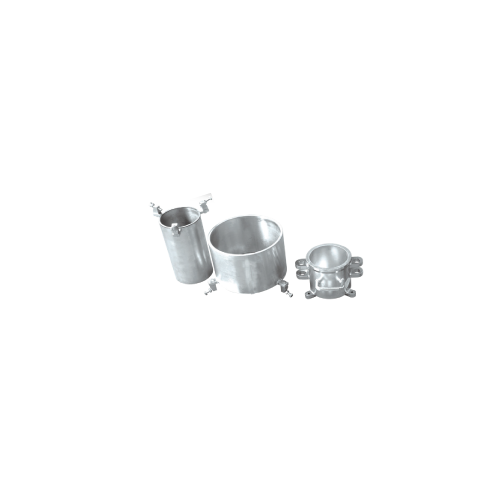
| 5033 X / 001 – P 002 | Relative Density Mould 0.5 cu, ft. c/w Accessories |
| 5033 X / 001 – P 003 | Relative Density Mould 0.1 cu, ft. c/w Accessories |
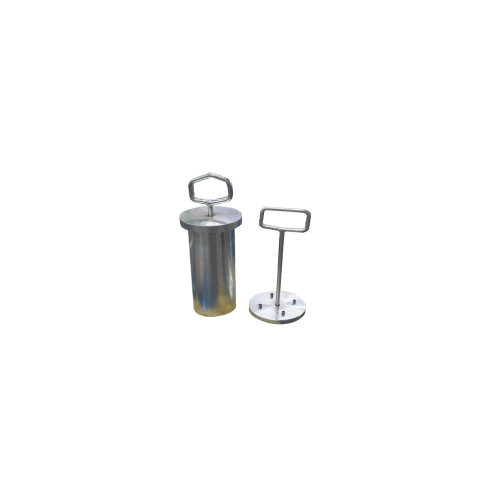
| 5033 X / 001 – P 004 | Surcharge Weight & Base with Handle (for 0.5 cu ft mould) |
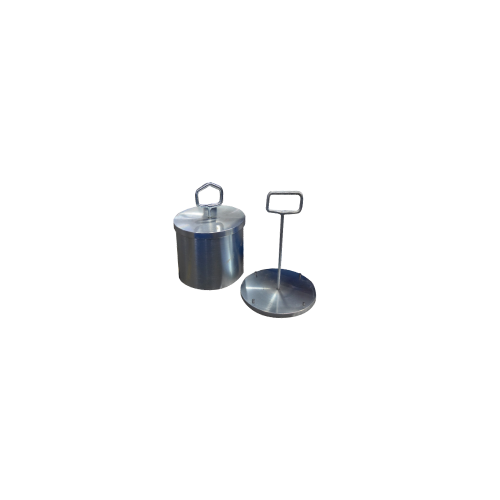
| 5033 X / 001 – P 005 | Surcharge Weight & Base with Handle (for 0.1 cu ft mould) |
| 5033 X / 001 – P 006 | Gauge Measuring Set c/w 50 x 0.01 mm dial Gauge |
Optional Accessories EN Version
| Model Number | Accessories Description |
| 5033 X / 001 – P 007 | Relative Density Mould 14 litres c/w Accessories |
| 5033 X / 001 – P 008 | Surcharge Weight & Base with Handle for 14 liters mould |
| 7025 X / 004 | Digital Caliper (for Deformation measuring) |



Reviews
There are no reviews yet.