



Description
Standard: ASTM C805, BS 1881-202, DIN 1048, UNI 9198, pr EN12504-2
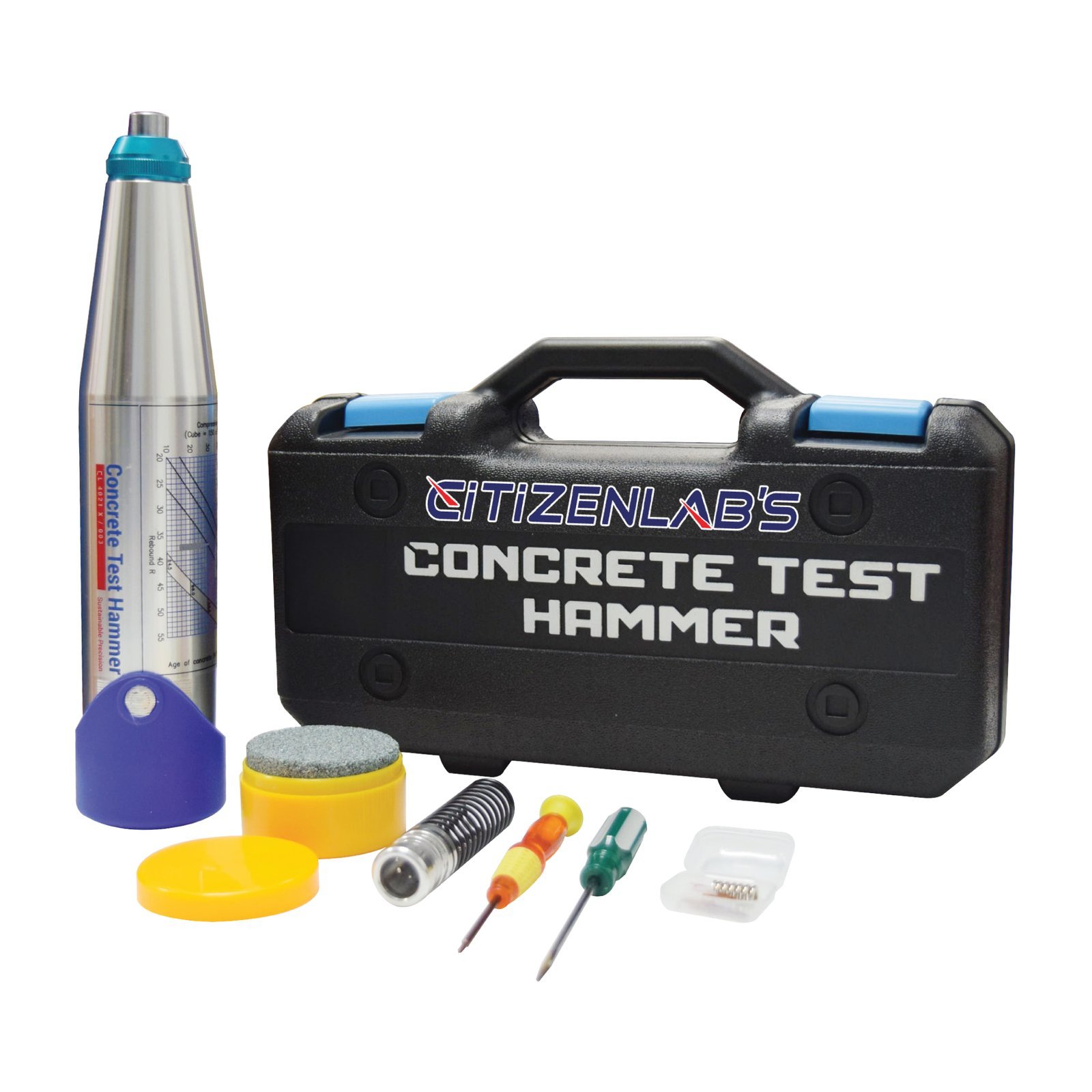
Concrete Test Hammer
The Concrete Test Hammer, also known as a Schmidt hammer or rebound hammer, is used to determine the compressive strength of concrete. The test hammer works on the principle of rebound. When the hammer strikes the surface of hardened concrete with a known impact energy, it rebounds back. The rebound distance is measured by the hammer and correlates with the compressive strength of the concrete. A higher rebound value typically indicates higher compressive strength. Concrete Test Hammers are portable and easy to use, making them popular tools for on-site inspections and quality control. However, it’s important to note that while the Concrete Test Hammer provides a quick estimate of concrete strength, they are not as accurate as traditional compression tests performed in a laboratory. Therefore, they are often used for preliminary assessments and quality assurance during construction projects. Scientific Concrete Test Hammer comes with a fully aluminum casing, a high-quality internal mechanism, extra durability up to 50,000 test cycles, and an additional soft silicone cap for comfortable usage.
Features of Concrete Test Hammer
- Fully Aluminum Casing: The use of aluminum for the casing likely provides durability while keeping the device lightweight and portable.
- Extra Durability: With a claim of durability of up to 50,000 test cycles, this test hammer likely offers longevity and consistent performance over an extended period.
- Soft Silicone Cap: The inclusion of a soft silicone cap suggests that the hammer is designed for comfortable and ergonomic usage, potentially reducing fatigue during prolonged testing sessions.
Standard: ASTM C805, BS 1881-202, DIN 1048, UNI 9198, pr EN12504-2
-
ASTM C805
This standard, published by ASTM International, provides a test method for the rebound number of hardened concrete. It outlines procedures for using the rebound hammer to assess the surface hardness of concrete, which correlates with compressive strength.
-
BS 1881-202
This British Standard, part of the BS 1881 series, covers the use of the rebound hammer for the assessment of in-place concrete strength. It provides guidelines and procedures for conducting rebound hammer tests on concrete structures.
-
DIN 1048
This is a German standard that pertains to the use of the rebound hammer for the testing of concrete strength. It likely outlines similar procedures and guidelines as the ASTM and BS standards but follows the standards set by the German Institute for Standardization (DIN).
-
UNI 9198
This is an Italian standard related to concrete testing. UNI (Ente Nazionale Italiano di Unificazione) establishes standards for various industries in Italy. UNI 9198 likely covers procedures and specifications for rebound hammer testing of concrete in Italy.
-
pr EN12504-2
This refers to a European standard (prEN) within the EN 12504 series. Specifically, EN12504-2 deals with “Non-destructive testing of concrete – Part 2: Determination of rebound number.” It provides standardized methods for using the rebound hammer to assess the properties of concrete.
Test Procedure of Concrete Test Hammer
- Prepare the Surface: Ensure that the surface of the concrete to be tested is clean, dry, and free from loose particles or debris. Remove any coatings, paint, or other surface treatments that could affect the rebound readings.
- Select Test Locations: Determine the locations on the concrete surface where tests will be conducted. These locations should be representative of the overall area being tested and should include different areas of the structure if applicable (e.g., different sections of a bridge deck).
- Perform the Test: Hold the rebound hammer perpendicular to the concrete surface with the plunger in contact with the surface. Apply sufficient pressure to ensure good contact between the plunger and the concrete.
- Release and Record the Rebound: Trigger the hammer to release the spring-loaded plunger, which strikes the concrete surface. The rebound distance of the plunger is then measured by a scale on the hammer or recorded digitally, depending on the model.
- Repeat: Perform multiple tests at each selected location to obtain a representative average rebound value. The number of tests required may vary depending on factors such as the size and condition of the concrete structure.
- Record Results: Record the rebound values obtained at each test location. Note the location, orientation, and any relevant details about the concrete surface (e.g., surface condition, age, exposure).
- Interpret Results: Compare the rebound values obtained to reference values or specifications provided by standards such as ASTM C805 or BS 1881-202. Rebound values are typically correlated with the compressive strength of concrete, allowing for an estimation of concrete quality and performance.
- Report Findings: Compile the test results and findings into a comprehensive report, including details of the test locations, rebound values, any observations or notes, and interpretations of the results.
Technical Specifications
| Model Number | 4021 X / 003N |
| Impact Energy | 0.225 mkg (2.207 Joule) |
| Casing Dimension (mm) | 320 (L) x 190 (W) x 90 (H) |
| Measurement Range | 10 to 70 N/mm² |
| Total Approx. Weight | 1.8 kg |
Unit Consists Of:
| Model Number | Parts Description |
| 4021 X / 003– P 001 | Concrete Hammer |
| 4021 X / 001 – P 002 | Grinding Stone |
| 4021 X / 001 – P 003 | Tool Kit Set |
| 4021 X / 001 – P 004 | Plunger Spring & Reading Indicator |
| 4021 X / 001 – P 005 | Smartz Carry Case |
*1 Copy of Manual Instruction
Optional Accessories
| Model Number | Accessories Description |
| 4021 X / 001 – A 001 | Concrete Hammer Anvil |

Reviews
There are no reviews yet.